
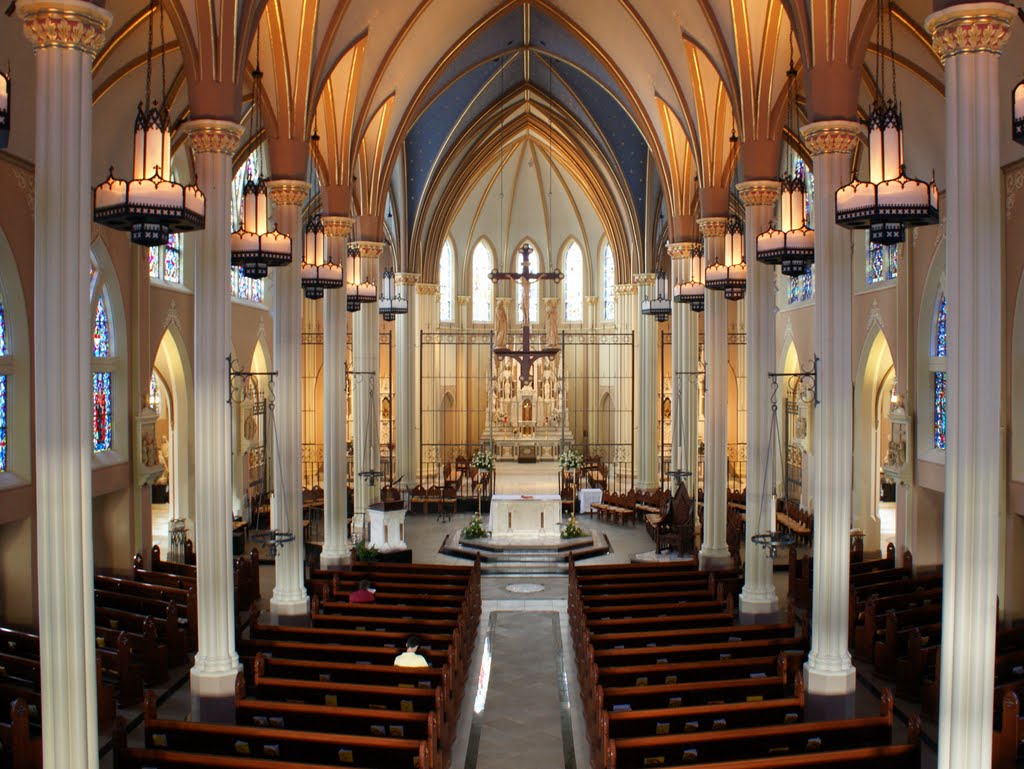

Beauty heals the soul.
WE LAUNCHED!!! 415 respondents, all 20 interviews completed.
Results will be made public January 2027 at Brescia University.
We are thrilled to announce our newest initiative, the first of its kind nationwide:
National Sociological Research Study of paid Directors of Music in the Roman Catholic Church who regularly provide chant and polyphony at Mass
collaborating with
Benedict XVI Institute in California
founded by Archbishop Cordileone in support of liturgical beauty.
This study is also being promoted by:
the Church Music Association of America, Corpus Christi Watershed and the Catholic Institute of Sacred Music.
Our lead researcher is Dr. Jonathon Holland of Brescia University.
We are trying to bring awareness to the general public of what these good musicians are about — their dedication, their needs, their sacrifices. We want people to know not just the musician at their own parish, but what the full cohort of such musicians faces, so they may treat them with greater care and respect.
We hope to encourage priests and musicians to start on the path of doing this music, becoming truly aware of the reality of these good men and women already working to bring beauty to the liturgy in this way as requested by the Church documents
We hope to encourage further research by other institutions to help the musicians be better supported and understood.
Please donate for this national research.
Methodology: First-hand data collection is made through a nationwide survey distributed through email and on websites by several institutions that reach sacred music musicians, and through direct contact. Data will be mostly quantitative, some qualitative. We hope to find correlations of trend and causation from the data collected. The survey and interview questions are designed to be empathetic, written in consultation with someone who has experience in this topic, they include insight, depth and feeling. Twenty in-depth interviews will be added with one-on-one conversations that use open-ended questions to explore a participant's personal experiences, motives, and opinions. Participation in the survey will require informed consent and will protect the confidentiality of respondents by not asking for any personal identifiable information. Personal information will only be volunteered for interview scheduling and will be destroyed as soon as interview is completed. Responses to survey and interview are not connected or correlated. We seek to help the general public recognize the heroic effort of sacred music musicians and shed light on their character. We seek to encourage more music of this kind at Masses nationwide, by providing data on its use. We seek to promote further research by other institutions to help musicians be better represented, supported and understood. The representativeness of our research will remain uncertain. We cannot know how many musicians are engaging in this type of music nationwide, as there is no secondary data or previous research on this population. Our research will provide data for other initiatives in the future. Secondary Data Analysis may use pre-existing datasets (e.g., census records, government statistics) to answer new research questions or conduct meta-analyses. We seek to find social trends and thematic patterns. This is an initial survey, further research may be needed to confirm some findings. Data will be made available to other researchers and to the general public. We are aware that sacred music musicians may include singers and volunteer music directors but they would require a separate study.